 Sultan Nawab

Almost every useful thing on the internet — a website, a web tool, a data dashboard, an automation script — starts with the same question: how do you make a computer do exactly what you want, reliably, step by step? Python is one of the clearest answers to that question. It reads almost like plain English, it powers web development, data work, and automation, and it is the first language many employers and clients expect a beginner developer to know.
Today’s giveaway is freeCodeCamp’s Scientific Computing with Python Certification: a free, self-paced certification that teaches Python from the basics all the way to object-oriented programming and databases, and finishes with five practical projects you can show to anyone. freeCodeCamp is a non-profit, and its certifications are free — you only need a free account to save your progress and claim your certificate. There is no payment step at any point, and no trial that quietly converts into a subscription.
Table of Contents
- About This Course
- What You’ll Learn
- Course Details
- Who Should Enroll
- How to Enroll for Free
- Frequently Asked Questions
- Related Guides
About This Course
freeCodeCamp is one of the most trusted names in free technical education. Its curriculum is built around doing, not just watching: you read short lessons, write real code in the browser, and prove what you learned by building projects. Millions of learners have used it to move into tech jobs, and its certificates are free to claim once you complete the required projects.
This certification is built on the classic Python for Everybody teaching approach: start with the smallest possible programs, understand each idea properly, and only then combine them into something bigger. That slow, careful build-up is exactly why it works so well for complete beginners. You are never asked to copy code you do not understand; every new concept is introduced with a small, runnable example you can change and break and fix yourself.
The course description on the official page makes the scope clear: you will learn to analyse and manipulate data using Python, including key concepts like data structures, algorithms, and object-oriented programming, and how to perform complex calculations with a variety of tools. Python itself is widely used for data science, data visualisation, web development, and more — so the skills here are not a dead end. They are the foundation for almost any programming direction you choose next.
One honest note: the official course page marks this as freeCodeCamp’s earlier curriculum, noting that the content is not being updated but is still fully available for learning. Python’s fundamentals — variables, loops, functions, data structures, and classes — have not changed, and the certification is still claimable. Treat it as a stable, proven path rather than the newest release, and you will not be disappointed.
It is also worth being clear about how this course differs from the Python Certification we featured earlier in this series. That course follows freeCodeCamp’s newer Python curriculum. This one is the original Scientific Computing with Python certification, with its own lessons and its own five projects. If you have already finished the newer Python course, this one still gives you valuable extra practice and a second, distinct certificate — and if you have not started Python at all, this is a complete beginner path in its own right.
What You’ll Learn
The curriculum follows the order a real programmer learns in: first make the computer do simple things, then organise your code, then work with real data, then build complete programs.
- Python fundamentals. You will start with variables, expressions, and conditional statements, then move to functions and loops — the building blocks every program is made from. By the end of the opening sections, you will be writing small programs that take input, make decisions, and repeat work automatically.
- Working with strings and files. You will learn how to read, slice, search, and transform text, and how to read data from files and process it line by line. This is the skill behind log analysers, report generators, and every script that turns a messy file into a clean answer.
- Lists, dictionaries, and tuples. Real programs hold collections of things, not single values. You will learn when to use a list, when a dictionary is the right tool, and how to loop through collections, sort them, and count and group their contents.
- Regular expressions. You will learn the pattern-matching language that lets you pull phone numbers, emails, and dates out of unstructured text — a small skill that saves hours of manual work and appears in almost every data-cleaning job.
- Networking, APIs, and data formats. You will learn how programs fetch data from the internet, how web services return XML and JSON, and how to parse those formats into values your program can use. This is the bridge between Python and the web: the same ideas power website back ends and automation tools.
- Object-oriented programming. You will learn how classes and objects let you bundle data and behaviour together, why that makes larger programs easier to manage, and how inheritance lets you reuse code instead of rewriting it.
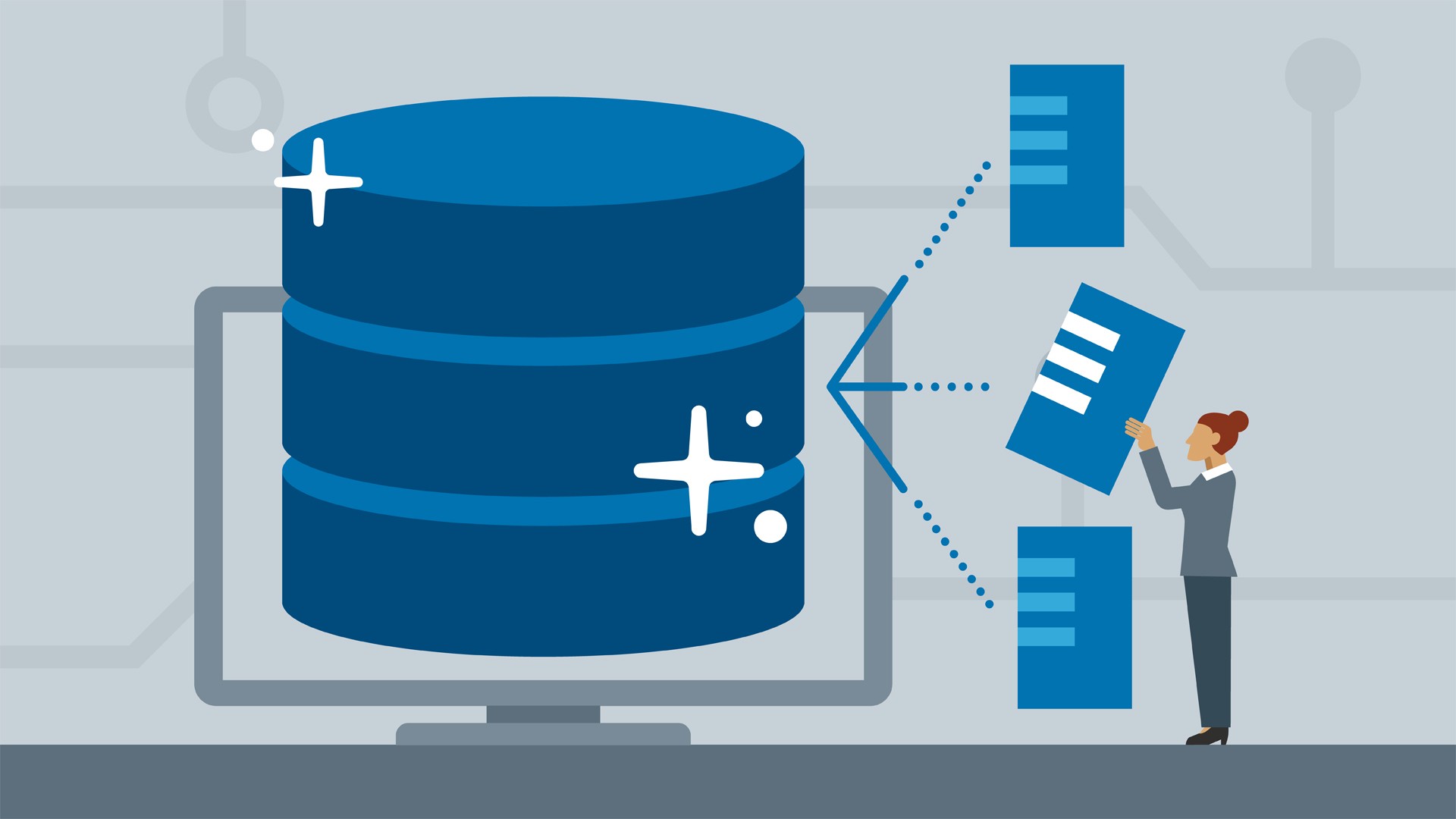
- Databases with SQLite. You will learn how to store data in a proper database, query it with SQL, and connect Python programs to that database — the foundation of every web application that remembers users, posts, and orders.
- Data structures and algorithms. You will build a working understanding of how data is organised and how efficient programs search, sort, and process it — the thinking skill that separates someone who can write code from someone who can solve problems with code.
- Five portfolio projects. You finish by building an arithmetic formatter, a time calculator, a budget app, a polygon area calculator, and a probability calculator — five finished programs that prove you can take a specification, write the code, and make it pass real tests.
Notice what this adds up to: not just “knowing Python syntax”, but the complete habit of a programmer. Read a problem, break it into steps, write code that handles each step, test it, and fix it when it fails. That habit transfers to web development, to WordPress plugin work, to data analysis, and to any programming language you learn afterwards.
Course Details
- Platform: freeCodeCamp.org
- Course: Scientific Computing with Python Certification
- Format: Self-paced interactive lessons plus five required projects, all in the browser
- Duration: Self-paced — work through the lessons and projects at your own speed, with no deadline
- Level: Beginner — no prior programming experience is assumed; the course starts from the very basics
- Certificate: Yes — a free certificate on completing the five required projects (a free account is needed to save progress and claim it)
- Language: English
- Cost: $0 — freeCodeCamp is a non-profit and the certification is free; the official page invites you to sign in to save your progress “for free”
Who Should Enroll
- Complete beginners who want to learn programming properly. If you have never written code and want a patient, structured first course rather than a rushed tutorial, this is one of the best free starting points anywhere.
- WordPress and website owners who want to understand code. You do not need Python to run WordPress, but learning how programming actually works makes themes, plugins, and custom code far less mysterious — and it opens the door to building small tools for your own site.
- Students and job seekers moving into tech. Python is one of the most requested skills in entry-level tech roles, and a free certificate plus five working projects is a concrete thing to show on a CV or freelance profile.
- Freelancers offering web or data services. Small automation scripts, data-cleaning jobs, and simple tools are services clients genuinely pay for. Python turns “I can build websites” into “I can build websites and automate the boring parts”.
- Anyone who finished a Python basics course and wants more practice. If you already know the basics from another course, the projects here — especially the budget app and the probability calculator — are excellent, test-driven practice that forces you to write complete, working programs.
How to Enroll for Free
- Open the official course page: https://www.freecodecamp.org/learn/scientific-computing-with-python/
- Create a free freeCodeCamp account (or sign in if you already have one) so your progress is saved and you can claim the certificate later — signing in is free.
- Click “Start Learning” and work through the lessons in order, starting with Python basics, functions, and loops.
- Work through strings, files, lists, dictionaries, regular expressions, and APIs, practising each concept in the interactive exercises as you go.
- Build the five required projects — the arithmetic formatter, time calculator, budget app, polygon area calculator, and probability calculator — and claim your free certificate.
That is the whole process. There is no checkout page, no card, and no premium tier for this certification — freeCodeCamp’s courses are free by design, and you can verify that the moment you open the official page.
Frequently Asked Questions
Yes. freeCodeCamp is a non-profit and its certifications are free. The official course page invites you to sign in to save your progress “for free”, and there is no payment step, trial period, or premium tier for this certification.
No. This certification is designed for complete beginners and starts from the very basics — variables, conditional statements, and loops — before building up to data structures, object-oriented programming, and databases.
Yes. Once you complete the five required projects — the arithmetic formatter, time calculator, budget app, polygon area calculator, and probability calculator — you can claim a free certificate with a free account. It is a useful, shareable credential for a CV or freelance profile.
No. The earlier Python Certification follows freeCodeCamp’s newer Python curriculum, while this is the original Scientific Computing with Python certification with its own lessons and five projects. Either one is a complete beginner path, and completing both gives you extra practice and a second certificate.
Related Guides
- Free Course Giveaway: Python Certification by freeCodeCamp — Learn Python Programming Free and Earn a Certificate — The newer Python path from the same platform: compare it with today’s course, or take both for deeper practice and two certificates.
- Free Course Giveaway: Data Analysis with Python Certification by freeCodeCamp — Turn Raw Data into Insights with Python — The natural next step once you know Python: learn NumPy and Pandas and turn raw data into answers with charts.
- How to Install WordPress on StackCP — Step-by-Step Guide — Get WordPress running on real hosting first, then use your new programming confidence to understand, customise, and extend your site with far less fear.
Learning to program is the skill that turns you from someone who uses software into someone who can build it. This free certification teaches Python properly — from the first line of code to databases and complete projects — and leaves you with five finished programs and a free certificate. When you are ready to put it to work on a live site of your own, FistHost plans start at $0.99/mo — use coupon welcomegift at https://fisthost.com/ and publish what you build.